Financing
HMRC Time to Pay arrangements: how they work, what HMRC asks, and why plans get refused
ContractorExit Editorial Team
In-house editorial · 5 Sep 2026 · 16 min read
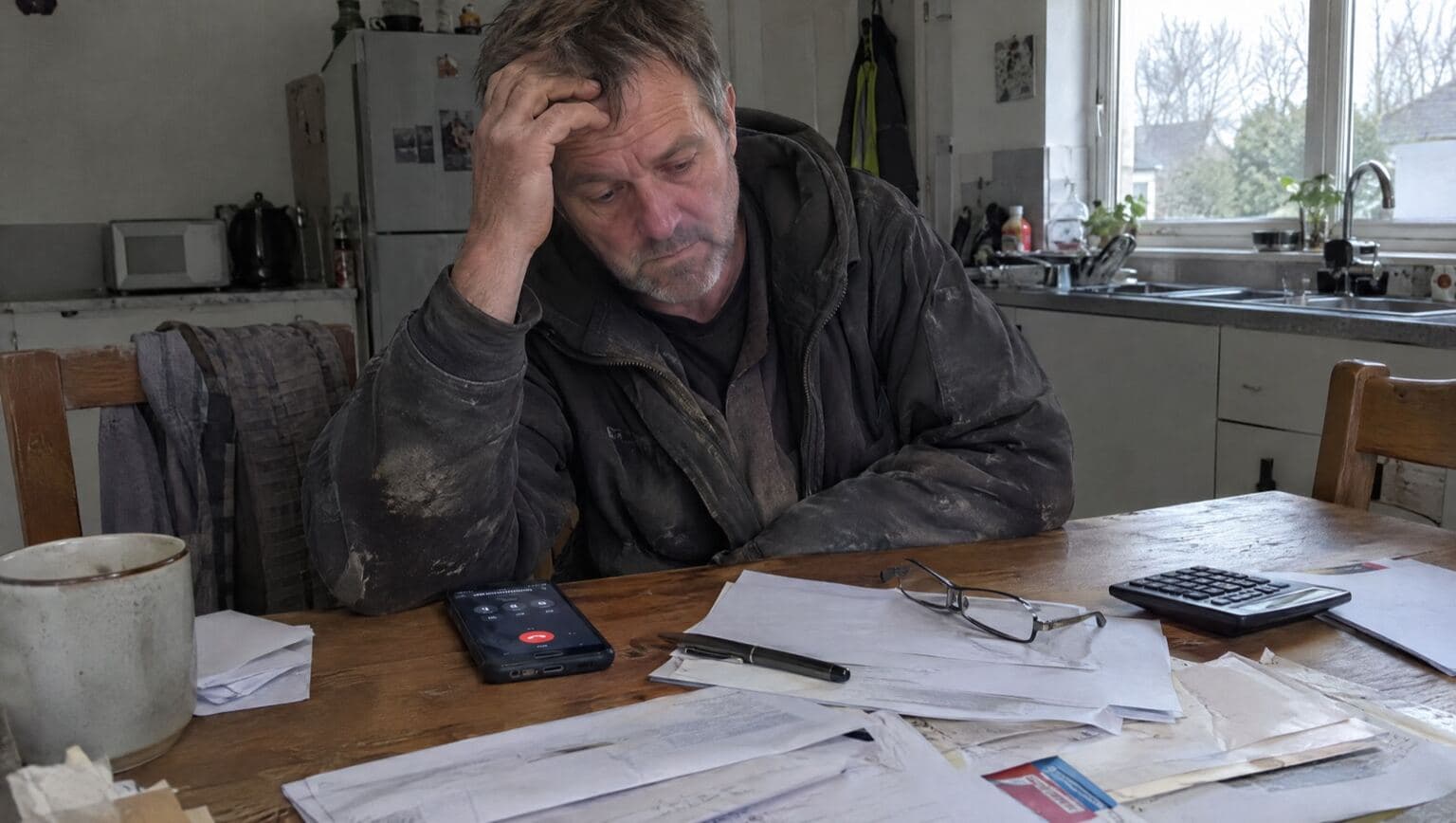
How an HMRC Time to Pay arrangement is decided: the questions HMRC asks, the maths behind the answer, and why a real VAT payment plan was refused.
A Time to Pay arrangement is an instalment plan HMRC agrees with you for tax you already owe. You keep the debt, HMRC stops chasing it, and you clear it by monthly direct debit. Most business plans run 12 months or less. Anything longer is treated as exceptional and needs a manager to authorise it.
Getting one is not a hardship application and it is not a negotiation about what feels fair. It is one arithmetic sum, filled in from answers you give on the phone, and the plan you get is whatever that sum produces. This guide shows you the sum, the questions in the order they arrive, a real refused call with the numbers that broke it, and the figures that will not work no matter how reasonable you sound.
At a glance
- HMRC works out disposable income as monthly sales revenue minus monthly business outgoings, then expects around half of it every month.
- So the rough limit of a standard 12 month plan is your monthly disposable income times six. On £4,000 spare a month, that is a £24,000 debt.
- The figures come from what you say on the call. Understate your costs and HMRC concludes you can clear the debt in three months, not twelve.
- Over 12 months means a 21 question Corporate Debt Questionnaire, a cash flow forecast and manager authorisation.
- Late payment penalties stop from the date you propose a plan, not the date it is agreed. Calling early is worth real money.
- Interest keeps running on the balance for the whole plan, at base rate plus 4%.
- Miss a payment or a future return and the plan is cancelled, with penalties recalculated as if it never existed.
How we know this. This guide is built from a recorded 20 minute call with HMRC's VAT Debt Management team in September 2026, checked line by line against HMRC's published rules: the Debt Management and Banking Manual, the Compliance Handbook, the GOV.UK payment plan guidance and the published source code of HMRC's own payment plan service. Every rule below links to the page it comes from, and the arithmetic is set out in full so you can run it on your own figures.
What a Time to Pay arrangement actually is
Time to Pay, usually shortened to TTP, is HMRC's instalment agreement for tax that is already due. It covers VAT, PAYE, Corporation Tax, Self Assessment and the penalties on them. It is not a write off, not a payment holiday, and not a formal insolvency process. The debt stays, interest keeps running, and enforcement pauses while you keep to the terms.
Two features of it catch business owners out.
It is only ever about liabilities HMRC can already see. A return that has not been filed is not a debt yet, so it cannot go into a plan. If you are behind on returns, file them first, even if you cannot pay them. Filing is what makes the arrangement possible.
It comes with a condition about the future, not just the past. Every arrangement requires that everything falling due during the plan is paid in full and on time as well. HMRC's own manual is blunt about it: "Where a customer requests TTP and there are on-going liabilities we must be certain that the customer can meet these on-going liabilities before agreeing TTP." For a construction firm that means the plan payment, plus next quarter's VAT, plus CIS on the 19th of every month, all landing on time.
An example of a real arrangement
Stripped of jargon, an agreed plan looks like this.
Example: a groundworks contractor, £18,000 VAT arrears
- Debt included: £18,000 VAT for the quarter ending 30 June, plus £240 of late payment penalties.
- Up front: £3,000 paid on the call from the company account, leaving £15,240.
- Instalments: £1,270 a month by direct debit on the 28th, for 12 months.
- Interest: charged on the reducing balance for the whole 12 months, on top of the instalments.
- Conditions: every VAT return filed and paid in full and on time during the plan, and HMRC told immediately if circumstances change.
- What HMRC had to see: monthly disposable income of at least about £2,540, because the instalment has to be roughly half of it.
That is the whole product. No paperwork if the numbers are straightforward, no negotiation about the interest, and a direct debit set up before you hang up. The only real variables are the up front payment, the monthly amount and the number of months, and all three fall out of one calculation.
Before you call: the four things that decide it
The outcome is mostly decided before you dial. Sort these first.
1. Every return filed
Returns up to date, including the one you cannot pay. An unfiled return means there is no agreed liability to arrange, and it makes you look like a filing risk on a rule that says future returns must be on time.
2. Exact monthly figures from your accountant
Monthly averages, excluding VAT, for sales revenue, wages and salaries including subcontractors, premises rent, premises bills, materials and stock, business travel and other regular overheads. Not last year's accounts, not a projection, not a guess. This is the single biggest determinant of what you are offered, and we show why below.
3. A realistic view of your bank balance
HMRC expects cash on hand to go towards the debt before any plan starts: "Where a business has cash in their bank account (or available overdraft) we would expect them to use this to clear their debt." You will be asked what is in the account. Know the number, know what it is committed to this week, and decide in advance what you can pay today.
4. An answer on borrowing
HMRC is a creditor of last resort by design. The manual says "we would expect businesses to have considered approaching their bank and discussed borrowing facilities before approaching HMRC", and gov.uk adds that HMRC "may ask company directors to: put personal funds into the business; accept lending; extend credit." Have a real answer: which lender, what they said, whether invoice finance on your debtor book is possible, what the directors can and cannot put in.
How to set one up, step by step
Step 1: check whether the online route is open to you
HMRC runs self serve payment plans for VAT and Self Assessment through your business tax account. It is quick and there is no affordability interview. The conditions are narrow, and they change, so check the current criteria on the GOV.UK payment plan pages before assuming. Broadly you need returns filed, to be within a set window after the payment deadline, to owe under a threshold, and, decisively, to have "no other payment plans or debts with HMRC".
That last one closes the online door on more businesses than any other. A few hundred pounds of unpaid PAYE sitting alongside a VAT bill is enough. If it does not apply to you, you are on the phone, which is the rest of this guide.
Step 2: call the Payment Support Service
The number for a debt you cannot pay is 0300 200 3835, Monday to Friday, 8am to 6pm. There is an automated menu, then security, then a debt management adviser for the tax in question. Call before the deadline if you can see the problem coming. Penalties stop from the date proposals are made, so an early call is worth money.
Step 3: get through security
You will be asked for the VAT number, the effective date of registration and the postcode you are registered at, then again by the adviser for the company name, the first line of the address, your name and position, and a contact number. Have the VAT certificate open. If your registered address is out of date, the adviser will flag it, and it is worth correcting because HMRC posts everything about the arrangement to it.
Step 4: answer the affordability questions
This is the part that decides the outcome. The full list is in the next section.
Step 5: agree the plan and set up the direct debit
If the sum supports what you asked for, the adviser sets it up on the call: the up front payment, the monthly amount, the date and the direct debit. You need a UK bank account in the company's name with a direct debit facility, and you need to be the account holder or have the authority to set one up. Confirmation follows by post to the registered address.
Step 6: keep it
Pay every instalment on the day, file and pay every return that falls due during the plan, and tell HMRC before, not after, anything changes.
The exact questions HMRC asks
This is a real sequence from a 20 minute call with HMRC's VAT Debt Management team in September 2026, in the order the questions came. Advisers vary the wording, not the substance.
Opening
- Are you calling to pay the outstanding balance in full today?
- Would you be looking to make a part payment towards the balance today?
- Can you make any sort of payment today at all?
- Are you the bank account holder, is it a UK registered bank account, and does it have a direct debit facility?
- Do you have any other HMRC debts? Anything on PAYE or Corporation Tax?
- Are you due any repayments of tax from HMRC?
Two of those are traps if you are unprepared. Any repayment due to you will be set against the debt before you see it. And the other debts question is not small talk: the adviser can see them, and any they find get pulled into the plan, which changes the arithmetic on the spot.
Circumstances
- Why is there a cash flow problem? Is it outstanding invoices?
- What changes are being made so that you can afford both the repayments and future liabilities?
- Are there any changes of circumstances expected during the term of the agreement?
The middle question is the one worth preparing properly. It is testing the condition that everything falling due during the plan gets paid on time. "More marketing" is a weak answer. "We have moved three clients to 14 day terms, invoice finance on the council debtor book is approved in principle, and the next VAT quarter is already about £17,000, which the plan is built around" is the answer that supports a longer term.
The income and expenditure worksheet
Then the sum. HMRC's own payment plan software has these fields, and you can see them in the published source of the service:
| Side | The line | What it means in practice |
|---|---|---|
| Cash | Current cash held in the company bank account | Asked first. Expect it to be used before any plan starts |
| Income | Regular monthly sales revenue | Gross sales, not profit. Monthly average, not an annual figure |
| Income | Other regular income | Rent received, grants, anything recurring |
| Outgoings | Wages and salaries | There is no separate line for subcontractors. They belong here, said out loud |
| Outgoings | Mortgage or rental payments on business premises | Premises only |
| Outgoings | Bills for business premises | Utilities, rates, service charge |
| Outgoings | Materials and stock costs | The line that sinks contractors. See below |
| Outgoings | Business travel | Fuel, mileage, vehicle running costs |
| Outgoings | Employee benefits | Pensions, healthcare, vehicles |
| Outgoings | Other regular monthly expenditure | Insurance, software, advertising, accountancy, bank charges, everything else |
Three things follow from that list, and all three cost people money.
Income means gross sales, not profit. Every cost you do not claim on the expenditure side is treated as money you have spare.
There is no line for subcontractors, CIS, the VAT on your next return, or loan repayments. They exist in the sum only if you put them under wages, materials or other. Nobody will prompt you.
Advisers often skip lines. On the call we listened to, business travel, premises bills and employee benefits were never asked about, which silently set them to zero. Give the figures anyway.
The maths behind the decision
The adviser adds up what you said and applies one rule. GOV.UK states it plainly, in the guidance written for individuals: "You'll usually be asked to pay around half of what you have left over each month towards the tax you owe."
| Step | The calculation |
|---|---|
| 1 | Disposable income = monthly sales revenue minus every monthly outgoing you declared |
| 2 | Minimum monthly payment = about 50% of disposable income |
| 3 | Term = the balance divided by that monthly payment |
| 4 | If the term is over 12 months, it needs a manager, a questionnaire and evidence |
Turn that around and you get the only number you really need before you call:
The rule of six. The biggest debt a standard 12 month plan will clear is roughly your monthly disposable income times six. Twelve months at half of what you have spare. If your books show £4,000 a month spare, a 12 month plan comfortably covers about £24,000, and a £52,000 debt is a different conversation entirely.
Note what the rule does not depend on. Not your turnover, not how long you have traded, not how sympathetic your story is. Only the gap between what comes in and what goes out each month, as you described it on the phone.
The published tests HMRC applies to a company sit on top of that: the plan must be "as short as possible" and you must have "the means to pay other liabilities that fall due during the TTP period"; cash and borrowing come before HMRC; and "the larger the debt in comparison to earnings/turnover then the longer it will take the customer to pay", which is one of the few rules that works in a growing firm's favour.
A refused call, with the real numbers
Here is what happens when the figures are given from memory. This is a real September 2026 call with HMRC VAT Debt Management, made by a director of a UK maintenance and construction firm with about £52,000 of VAT arrears and just over £1,000 of unpaid PAYE. The business is not named and the figures are rounded. He wanted 12 months. He was offered three.
He did the easy parts right. He called before enforcement, he offered £3,000 on the day out of a £4,000 balance, and he explained the cause honestly: council and housing association work through a platform, invoices sitting unpaid. Then came the worksheet, and he answered from memory.
| HMRC line | What he said | What it did |
|---|---|---|
| Sales revenue | "Last year 400,000, this year we are looking at 800,000" | Recorded as £66,667 a month. It was a projection, and higher than the actual run rate |
| Wages and salaries | £30,000 a month | Recorded as the entire labour bill. The books showed labour, subcontractors and travel closer to £38,000, plus office payroll on top |
| Materials and stock | "We keep buying as it goes, there is not a real figure" | Recorded as zero. The books showed about £18,500 a month |
| Rent | £2,000 a month | The ledger showed nearer £300. The one figure he overstated |
| Other regular expenditure | "Subscriptions, maybe £1,500" | Recorded as the entire overhead. The books showed about £17,000 including office payroll, directors, insurance, advertising, software and accountancy |
| Business travel, premises bills, employee benefits | Never asked | Zero |
The adviser read the figures back, ran the sum, and gave the answer out loud:
"With the figures that you've provided, it's saying that you do have a monthly disposable income of £33,166.67, and what HMRC would be looking at is taking at least 50% of that. So we would be looking to get this cleared in 3 months."
The arithmetic, exactly as the system ran it:
| Line | Figure |
|---|---|
| Income, 800,000 divided by 12 | £66,666.67 |
| Outgoings, 30,000 + 2,000 + 0 materials + 1,500 | £33,500.00 |
| Disposable income | £33,166.67 |
| 50% of disposable, the minimum monthly payment | £16,583.33 |
| £52,000 at that rate | 3.1 months |
Now the same worksheet from the management accounts, which is what the accountant produced afterwards.
| HMRC line | Said on the call | Actual monthly average |
|---|---|---|
| Sales revenue | £66,700 | £78,600 |
| Wages, salaries, subcontractors and travel | £30,000 | £43,800 |
| Materials and stock | £0 | £19,200 |
| Rent and premises | £2,000 | £300 |
| Other regular expenditure | £1,500 | £10,600 |
| Disposable income | £33,167 | £4,700 |
| 50%, the minimum offer | £16,583 | £2,350 |
| Months to clear £52,000 | 3 | 22 |
Read those two columns together, because the lesson is counterintuitive. Understating your costs does not make you look like a safe bet who deserves a plan. It makes you look like a business with £33,000 a month spare, which means HMRC wants the money in three months and refuses the twelve you asked for. The turnover figure he was proudest of is the one that did the most damage.
And notice where the real problem sits. On the true figures, the £3,000 a month he offered is already more than HMRC's 50% minimum. Affordability was never the blocker. The blocker is the term: £52,000 at £3,000 a month is 17 months, and 12 is the line. That is a completely different conversation, and one you can only have with accurate figures in front of you.
The numbers that will not work
Before you call, check your debt against your real disposable income. If the numbers below say no, plan for the call you are actually going to have rather than the one you hoped for.
What a 12 month plan needs
| Debt | Monthly payment over 12 months | Disposable income you must show |
|---|---|---|
| £10,000 | £833 | £1,670 |
| £20,000 | £1,667 | £3,330 |
| £30,000 | £2,500 | £5,000 |
| £50,000 | £4,167 | £8,330 |
| £75,000 | £6,250 | £12,500 |
| £100,000 | £8,333 | £16,670 |
What your disposable income actually buys
| Monthly disposable income | Minimum HMRC will expect | Debt that clears inside 12 months |
|---|---|---|
| £1,000 | £500 | £6,000 |
| £2,500 | £1,250 | £15,000 |
| £4,700 | £2,350 | £28,200 |
| £8,000 | £4,000 | £48,000 |
| £12,000 | £6,000 | £72,000 |
Three patterns to take from those tables.
A debt bigger than six times your monthly disposable income is an over 12 months case. It can still be agreed, but not by the first adviser you speak to, and not without evidence. Plan for that rather than discovering it live.
A loss making run of months is a viability problem, not an affordability problem. If your last quarter shows nothing spare at all, the sum produces no plan of any length. The answer is a year to date picture plus an explanation of the bad months, not a bigger promise.
The gap is usually closed with a lump sum, not a longer term. Getting the balance under six times your disposable income is often easier than persuading a manager to authorise 18 months. On the example above, roughly £16,000 up front would have turned an impossible 17 month ask into a standard 12 month plan at the same £3,000 a month.
Why plans get refused
In rough order of how often they cause the refusal.
- Figures given from memory. The single biggest cause. Costs get left out, revenue gets given as a projection, and the sum produces a term nobody can afford.
- Materials and subcontractors recorded as zero. "It depends on the job" is heard as "no regular cost". For a contractor that is often the largest number in the business.
- Annual turnover instead of a monthly average. Especially a growth projection. The worksheet wants an average month, from the books.
- Returns not filed. There is no liability to arrange, and it undermines the promise that future returns will be on time.
- Cash in the bank that was not offered. HMRC expects available cash and overdraft to go first, and asks for the balance early precisely to check.
- No answer on borrowing. HMRC expects the bank, invoice finance and director funds to have been explored before it is asked to wait.
- Nothing credible about future liabilities. If you cannot show how next quarter's VAT and this month's CIS get paid, the plan fails the ongoing liabilities test whatever the sum says.
- Asking for more than 12 months at the first attempt, with nothing to support it. No forecast, no aged debtor list, no management accounts.
- A previously broken arrangement. It does not bar a new one, but it raises the bar on evidence.
- Figures that contradict what HMRC already holds. Turnover is checkable against box 6 of your VAT returns and subcontractor payments against your CIS returns. If your numbers do not reconcile, the adviser stops trusting all of them.
Two more that are worth stating plainly. A plan obtained on figures that are not true can be cancelled outright: HMRC withdraws arrangements where "the customer has misled us or has been untruthful". And a refusal is not the end. The adviser on the refused call finished with an instruction, not a rejection: get the exact figures for sales revenue, wages and salaries, rent, materials and stock and other regular expenditure from your accountant, then call back and have the discussion again. Call backs with real numbers are normal and expected.
Going over 12 months
There is no statutory maximum. GOV.UK says outright that "There's no time limit on how long a payment plan can last". But internally, 12 months is the line where the process changes: "TTP arrangements exceeding 12 months are exceptional and must be authorised by a manager".
For business debts under £250,000 the manual sets out a stepped approach. Up to three months, the adviser simply negotiates. "Above three months and up to 12 months: You need to ask questions based on the business debt negotiating framework", which is the worksheet above. Over 12 months, the adviser has to complete a Corporate Debt Questionnaire, which "consists of 21 questions" taken over the phone, covering why the company cannot pay, its banking facilities, what it has done to raise money, its debtors and creditors, and what it believes it can afford.
What gets a longer term agreed is evidence. The manual names a cash flow forecast that "covers, at least, from the current month to a period extending to three months beyond the end date of the TTP", plus the detailed trading and profit and loss account and any recent management accounts. In practice, bring four things:
- A cash flow forecast running three months past the end of the plan, showing the instalments, the next VAT return and monthly CIS all paid.
- An aged debtor list. If the story is "clients are holding payment", this is the proof, and it is the most persuasive document you own.
- Recent management accounts and three to six months of bank statements.
- A written answer to "what have you done to raise the money elsewhere".
What it costs while you owe
An arrangement is not free, and the timing of your call changes the bill.
Penalties
For VAT accounting periods from 1 January 2023, the late payment penalty regime is: nothing for the first 15 days, then a first penalty of 3% of what is outstanding at day 15 plus a further 3% of what is still outstanding at day 30, then a second penalty accruing daily from day 31 at an annualised rate of 10% on the outstanding balance.
Here is the part worth acting on. HMRC's Compliance Handbook says that if an arrangement is agreed, "this stops late payment penalties applying from the date the proposals for paying the tax were made by the person." Not the date it is agreed. The date you proposed it. A call on day 12 that turns into an agreed plan on day 40 stops the clock at day 12. On a £50,000 debt, getting in before day 15 saves £1,500 immediately, and beating day 30 saves £1,500 more.
Interest
Interest runs on the balance for the whole plan, "calculated at the Bank of England base rate plus 4%", and HMRC charges it "on the outstanding balance until you pay the tax in full". That was 7.75% from 9 January 2026; check the current HMRC rate before you budget. It is not a penalty rate, but on a 12 month plan for £50,000 it is still roughly £2,000 of real money, which is why paying more than the minimum where you can is worth it.
What breaks a plan once it is agreed
The conditions are short and they are all absolute. HMRC's manual lists them: the customer must have been honest, "All future liabilities must be paid in full and on time", and the customer must report any change in circumstances.
Breaking any of them has a specific consequence beyond losing the plan. On penalties, HMRC's position is that when an arrangement is broken, "the liability for both the first penalty and second penalty will be calculated as if the TTP never had effect." The penalty protection you earned by calling early is retrospectively removed, and the whole balance becomes payable at once and enforceable.
So the plan you should agree to is not the largest one you can imagine making. It is the one that survives a bad month, because that is the one that keeps the penalty clock stopped. If cash flow changes, call before the payment is missed. HMRC can vary an arrangement. It deals far worse with silence.
If the numbers say no plan works
Sometimes the honest worksheet produces nothing spare at all, or a term so long that no manager will authorise it. That is not an affordability problem to be argued around. It is the business telling you something, and it is worth hearing early, while you still have options that are yours to choose.
At that point the real questions are different. Is this a timing problem inside a profitable business, where invoice finance against a solid debtor book solves it in a fortnight? Is it a pricing or job mix problem that a good quarter fixes? Or is the business structurally unable to service what it owes, in which case a licensed insolvency practitioner is the right call, today rather than in three months.
There is a fourth option that owners under pressure rarely consider until it is too late to use: selling. A trade business with real contracts, a working crew and a recognisable debtor book is an asset, and it is worth considerably more sold as a going concern than wound up. Tax arrears do not make a business unsellable. Buyers deal with HMRC debt routinely, usually by paying it off out of the proceeds at completion. What does make a business unsellable is waiting until the bailiffs, a winding up petition or a strike off notice have already landed, because at that point the buyers who would have paid a fair price have gone.
If any of that is in view, find out what you are sitting on before you decide anything. A free valuation takes under a minute, and our guides to what a UK contracting business is worth and how to sell one properly cover the rest.
The short version
- Time to Pay is instalments on tax you already owe, decided by one sum, not by negotiation.
- Disposable income is monthly sales minus monthly outgoings, and HMRC expects about half of it every month.
- A standard 12 month plan clears roughly six times your monthly disposable income. Check your debt against that before you call.
- File every return first, including the one you cannot pay.
- Get exact monthly figures from your accountant, including subcontractors and materials. Guessed figures produce a three month demand, not a twelve month plan.
- Offer something on the day. HMRC expects available cash to go first and reads an up front payment as good faith.
- Over 12 months means a 21 question questionnaire, a cash flow forecast, an aged debtor list and a manager.
- Call early. Penalties stop from the date you propose a plan, and interest runs at base rate plus 4% throughout.
- Only agree to what survives a bad month. Breaking the plan recalculates the penalties as if it never existed.
This article is general information about HMRC's Time to Pay process, not tax, legal or insolvency advice. Rates, thresholds and eligibility criteria change; every figure here was checked against GOV.UK and HMRC's published manuals in September 2026, but confirm the current position before relying on it. If your company cannot pay its debts as they fall due, speak to a licensed insolvency practitioner.
Working out whether to fight for the business or sell it? Get a free ballpark valuation in under a minute, no sign-up needed, or list your business and we will connect you with a vetted broker and solicitor who have handled sales with tax arrears before.
Frequently asked questions
What is an HMRC Time to Pay arrangement?
It is an instalment plan HMRC agrees for tax you already owe, covering VAT, PAYE, Corporation Tax or Self Assessment. The debt stays and interest keeps running, but enforcement pauses while you keep to the monthly payments and pay everything that falls due during the plan on time.
How much will HMRC ask me to pay each month?
Around half of your monthly disposable income. GOV.UK says you will usually be asked to pay around half of what you have left over each month. Disposable income is your monthly sales revenue minus the monthly business outgoings you declare on the call.
How long can a Time to Pay arrangement last?
There is no statutory limit, but 12 months is the practical line. HMRC's manual says arrangements exceeding 12 months are exceptional and must be authorised by a manager, and over 12 months the adviser has to complete a 21 question Corporate Debt Questionnaire.
What questions does HMRC ask for a Time to Pay arrangement?
After security, whether you can pay in full or in part today, your bank details and direct debit facility, any other HMRC debts, any repayments due to you, why you have a cash flow problem and what is changing. Then the worksheet: cash in the bank, monthly sales revenue, other income, wages and salaries, premises rent, premises bills, materials and stock, business travel, employee benefits and other regular monthly expenditure.
Why was my Time to Pay arrangement refused?
Most often because the figures given on the call understated the real costs. Leaving materials or subcontractors at zero, or giving annual turnover instead of a monthly average, produces a large disposable income and a short repayment demand. Other common causes are unfiled returns, cash in the bank that was not offered, no answer on borrowing, and no credible plan for paying liabilities that fall due during the arrangement.
How much debt can a 12 month plan cover?
Roughly six times your monthly disposable income, because the plan takes about half of it for 12 months. On £4,000 a month spare that is about £24,000. A debt much larger than that needs a lump sum to bring it down, or an over 12 month case with a manager's authorisation.
Do penalties and interest stop when I agree a payment plan?
Penalties stop from the date you propose the plan, not the date it is agreed, so calling early protects money. Interest does not stop: HMRC charges it on the outstanding balance at the Bank of England base rate plus 4% until the tax is paid in full.
Can I set up a VAT payment plan online instead of calling?
Sometimes. HMRC's self serve VAT plan requires filed returns, a debt inside the published threshold, an application inside the window after the payment deadline, and no other payment plans or debts with HMRC. That last condition rules out most businesses with more than one kind of arrears, for example VAT plus a small PAYE balance, and those cases have to go through the Payment Support Service on 0300 200 3835.
What happens if I miss a Time to Pay payment?
The arrangement can be cancelled and the whole balance becomes payable and enforceable at once. HMRC also recalculates the first and second late payment penalties as if the arrangement never had effect, removing the protection you earned by proposing it. Call before you miss a payment: HMRC can vary an arrangement, but it responds badly to silence.
Can I sell my business if it owes HMRC?
Yes. Tax arrears do not make a trade business unsellable, and the debt is usually settled out of the proceeds at completion. What damages a sale is waiting until enforcement action, a winding up petition or a strike off notice is already on the record, because serious buyers withdraw at that point.
Thinking about your own exit?
Get a free, instant ballpark valuation - no sign-up to see your estimate - then we connect you with a vetted broker and lawyer to handle the sale.