Selling
Owner Dependence: The Number One Thing Cutting Your Sale Price
ContractorExit Editorial Team
In-house editorial · 4 Sep 2026 · 9 min read
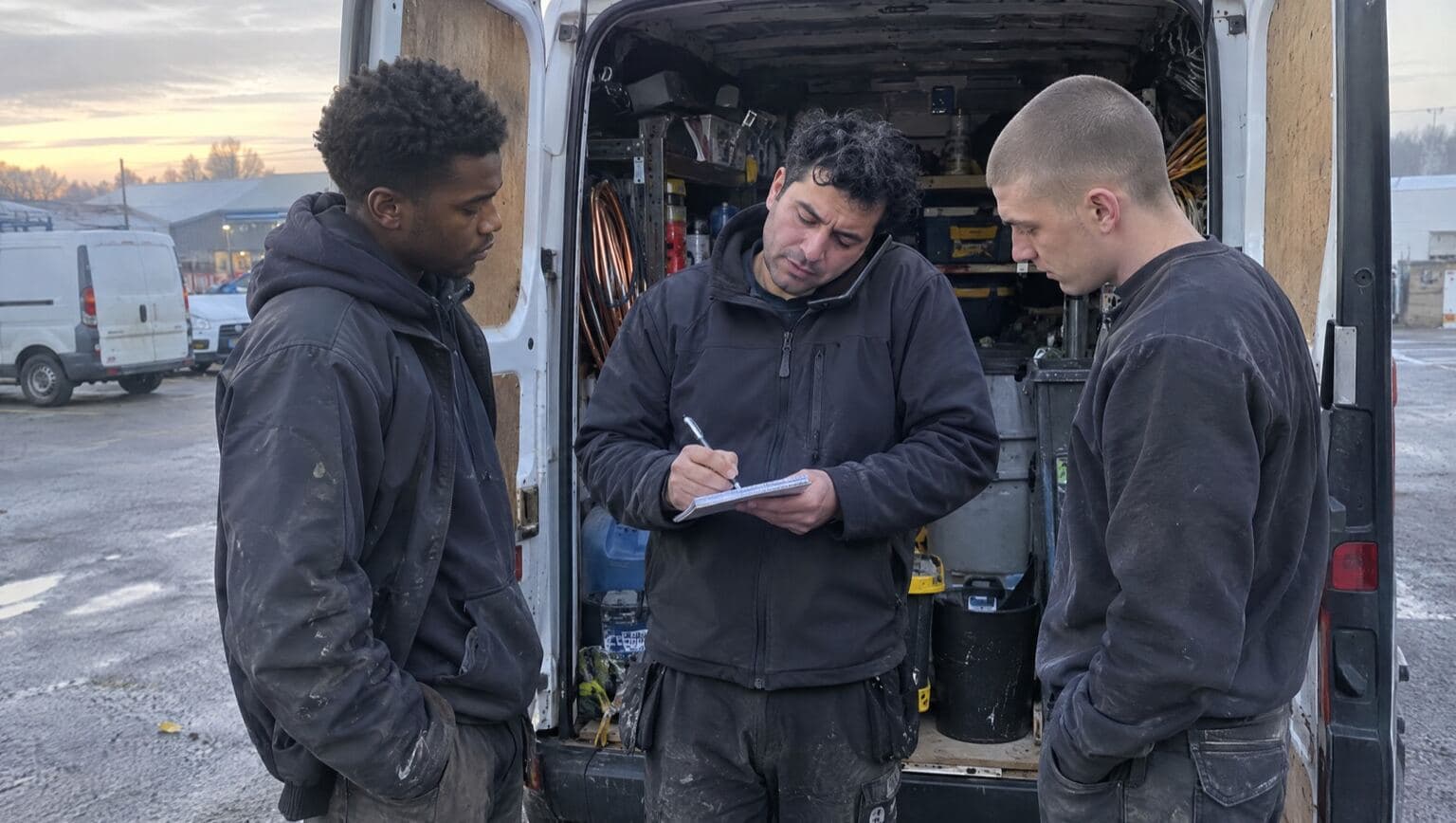
Owner dependence is the biggest thing cutting your sale price - worth one to two full turns of SDE. How buyers test for it, and how to fix it before you list.
An owner dependent business is one that cannot run, sell to a new customer, or fix a broken truck without the owner personally doing it - and it is the single biggest thing cutting your sale price, worth roughly one to two full turns of SDE. On a $300,000 SDE trades business, that gap is $300,000 to $600,000, and it shows up not as a slightly lower offer but as buyers walking away entirely once diligence exposes how much of the business is really just you with a payroll attached. Here is exactly how buyers price owner dependence, the math behind the number, and what actually fixes it before you list.
What makes a business "owner dependent"
Every trades business has some owner involvement on day one - somebody has to run it. The question a buyer is really asking is narrower: if you disappeared for two weeks, would revenue, customer relationships and job quality hold up, or would the business visibly wobble? An owner dependent business fails that test in one or more of these ways:
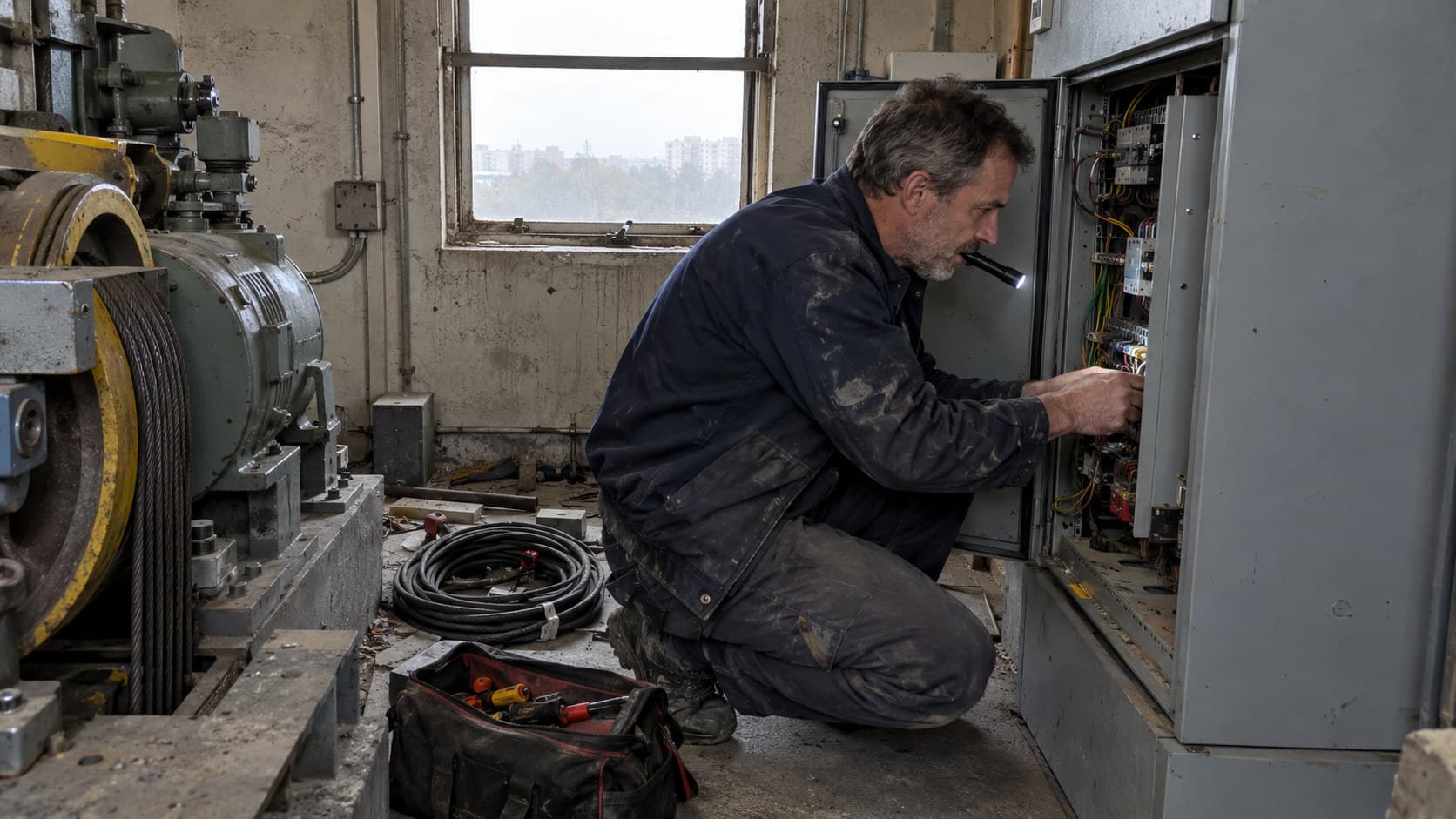
- You are the top estimator or technician. The biggest jobs, or the trickiest ones, only get done right when you personally show up.
- Customers call you, not the office. Relationships live with your cell phone number, not with a scheduling system or an account manager.
- You hold the license or bond personally. Nothing transfers to a new owner without a licensing fight (see our guide on how licensing risk moves your valuation).
- There is no real number two. Nobody else on the team can make a pricing call, handle an angry customer, or approve a purchase order without checking with you first.
- You sign every check and every quote. Financial and operational control never leaves your desk.
None of these are unusual for an owner-operated trades business. What matters is how many of them are still true the week you decide to sell.
Why buyers price owner dependence so harshly
A buyer financing a purchase with an SBA 7(a) loan, or a private equity platform doing an add-on, is not buying your history - they are buying the next ten years of cash flow, and that cash flow only materializes if the business keeps functioning once you walk away. An owner dependent business is not really a company for sale. It is a job with your name on it, wrapped in a corporate structure, and buyers price that risk the same way a bank prices risk into an interest rate: by paying less for every dollar of earnings.
This shows up directly in the data. IBBA and M&A Source's Q1 2026 Market Pulse survey puts the median multiple for deals under $500,000 at roughly 2.0x SDE, climbing toward 3.0x-3.3x SDE as deal size moves into the $1 million-$2 million range - and brokers surveyed consistently attribute a meaningful share of that spread to management depth, not just size. A business with a genuine number two, documented processes and customer relationships that live with the company rather than the owner routinely earns a full turn or more above an otherwise identical, owner-run competitor.
A buyer isn't paying you for the business you built. They're paying you for the business that keeps running after you leave it.
The real math: what owner dependence costs on a $300,000 SDE business
Take two trades businesses, both producing $300,000 in seller's discretionary earnings, both in the same market. Walk through what each one actually sells for.
- Business A - owner dependent. The owner is the lead estimator, holds the only relationships with the top five customers, and personally signs every job over $10,000. No documented processes. At a 2.0x SDE multiple, typical for smaller, owner-run deals per IBBA's Market Pulse data, that's a $600,000 sale price - assuming a buyer doesn't simply walk after diligence exposes how thin the management layer really is.
- Business B - runs without the owner. A promoted operations manager handles scheduling and estimating, the top accounts are managed by a second employee, and the owner has been off the tools for eighteen months. At a 3.0x-3.3x SDE multiple - the band IBBA associates with genuine management depth and lower buyer risk - that's $900,000 to $990,000.
Same revenue. Same profit. A $300,000-$390,000 difference in what lands in the seller's pocket, purely from who the business depends on to keep running. For the full mechanics of how SDE and multiples interact, see what SDE is and how it's calculated and the complete blue collar business valuation guide.
How buyers test for owner dependence in diligence
Buyers do not take your word for it that the business runs without you. They test it, usually in this order:
- Customer interviews. A buyer or their advisor calls your top accounts and asks who they actually deal with day to day. If every answer is your first name, that's a documented red flag in the deal file.
- Org chart versus payroll reality. They compare your stated management structure to who actually approves quotes, schedules crews and handles escalations - and it's obvious fast when the chart is aspirational.
- The "what if you got hit by a bus" question. Almost every experienced buyer asks some version of this directly, and hesitation in the answer is itself the answer.
- A trial transition period. Larger buyers, especially private equity add-ons, will structure an earnout or a seller-note holdback specifically tied to the business hitting targets after you step back - a direct financial test of owner dependence built into the deal.
This is a large part of why deals fall through in diligence rather than at the offer stage - owner dependence is easy to gloss over in a first conversation and hard to hide once someone starts calling your customers.
How to reduce owner dependence before you sell
None of this is fixed in a weekend, which is exactly why it needs to start well before you list. The good news is that every step here also makes running the business better right now, not just more sellable later.
- Promote or hire a real operations lead. Someone who can make pricing decisions, handle scheduling and manage an angry customer call without escalating to you. This single move does more for your multiple than anything else on this list.
- Move customer relationships onto the company, not you. Introduce your operations lead or account manager to every major customer personally, and start routing their calls there deliberately.
- Take a real two-week trip and see what breaks. Whatever fails while you're gone is precisely what a buyer will worry about - fix it now, while it's still your problem to solve calmly rather than theirs to discover in diligence.
- Document your top ten recurring jobs. Even simple one-page procedures turn tribal knowledge only you carry into a repeatable process a new owner can run.
- Resolve who holds the license. If it's personal to you, work out early whether a qualifying employee can hold it, or whether you'll need to stay on as a transitional qualifier post-sale.
The full 12-24 month version of this work, including books, contracts and customer concentration, is in our complete pre-sale prep checklist.
How long reducing owner dependence actually takes
Owners often ask if this can be compressed into a few months before listing. Mostly, no - and the reason is trust, not effort. A buyer isn't just checking whether an operations manager exists on paper; they're checking whether that person has actually been running things long enough for it to be believable. A few realistic timelines:
- Hiring or promoting an operations lead: 2-4 months to find and onboard the right person, then 6-12 months of them visibly running day-to-day operations before a buyer treats it as fact rather than a story you're telling them at the negotiating table.
- Moving customer relationships off the owner: faster for new accounts, slower for legacy ones. Long-tenured customers who have called you personally for a decade take deliberate, repeated handoffs, not one email.
- Resolving a personally-held license: can take a full licensing cycle in some states if you need an employee to sit for their own qualifier exam, so this is often the longest single item on the list - start it first.
The common mistake is starting this work the same quarter you list. A buyer's diligence team can tell the difference between a management layer that's been load-bearing for a year and one installed six weeks before the business went to market - and they price the difference accordingly.
The subcontractor model: the fastest structural fix
The owners who close the owner-dependence gap fastest usually do it by rebuilding how work actually gets delivered, not just by hiring a manager on top of the existing setup. Shifting field delivery onto a managed network of subcontractors, while you keep the customer relationship, the estimating and the margin, is the core idea behind construction arbitrage - and it does double duty: it takes you off the tools immediately, and it proves to a buyer that the business's earning power comes from a system, not from your own two hands on a job site. Owners who restructure delivery this way before listing are the ones who show up in Business B's numbers above, not Business A's. If you want the mechanics of running a trades business this way, constructionarbitrage.com walks through the full model.
Owner dependence is the cheapest multiple expansion you can buy
Every other lever that moves a trades business valuation - revenue growth, new contracts, a better location - costs real money and real time to pull. Reducing owner dependence mostly costs discipline: promoting someone, stepping back deliberately, and documenting what's currently only in your head. It is routinely the highest-return work an owner can do in the 12-24 months before a sale, and it is the first thing a buyer's diligence team will probe.
Get a free valuation to see where owner dependence is currently showing up in your number, or read the complete how to sell a blue collar business guide for the full process from prep through closing. Ready to see what a business that doesn't depend on its owner looks like from the buyer's side? Browse live listings.
Frequently asked questions
What does it mean for a business to be owner dependent?
It means the business can't function at full strength without the owner personally involved - as the top estimator, the only person customers trust, the license holder, or the one who signs off on every decision. Buyers test for it directly, and the more of these roles only you can fill, the harder the business is to sell at a full price.
How much does owner dependence reduce a business's sale price?
Roughly one to two full turns of SDE. IBBA and M&A Source's Market Pulse data shows median multiples around 2.0x SDE for smaller, owner-run deals climbing to 3.0x-3.3x SDE as management depth increases, so on a $300,000 SDE business the gap between owner dependent and not is commonly $300,000 to $390,000 or more.
How long does it take to reduce owner dependence before selling?
Plan on 12-24 months. Hiring or promoting an operations lead takes a few months, but a buyer needs to see that person visibly running the business for six to twelve months before they'll treat the management layer as real rather than something installed right before listing. A personally-held license can take even longer if an employee needs to qualify independently.
Can I still sell an owner-dependent business?
Yes, but expect a lower multiple, a smaller buyer pool limited mostly to other owner-operators, and deal structures like earnouts or extended transition periods that tie part of your payout to the business surviving without you. Some buyers specifically look for owner-dependent businesses because they plan to run them personally, but they price that risk into the offer.
What's the fastest way to make a trades business less owner dependent?
Promote or hire a real operations lead who can make pricing and scheduling decisions without checking with you, then deliberately move customer relationships onto that person or the company rather than you personally. Restructuring field delivery onto a managed subcontractor model, rather than being on the tools yourself, does the same job structurally and faster.
Does owner dependence matter more for SDE deals or EBITDA deals?
It matters at every deal size, but it shows up differently. Below roughly $2 million in price, where deals are valued on SDE, owner dependence is often the single biggest swing factor in the multiple. Above that, in EBITDA territory, buyers assume a hired management team already exists, so an owner-dependent business at that size gets treated as a red flag rather than just a lower multiple.
Thinking about your own exit?
Get a free, instant ballpark valuation - no sign-up to see your estimate - then we connect you with a vetted broker and lawyer to handle the sale.