Selling
How to Sell a Landscaping Business
ContractorExit Editorial Team
In-house editorial · 28 Aug 2026 · 11 min read
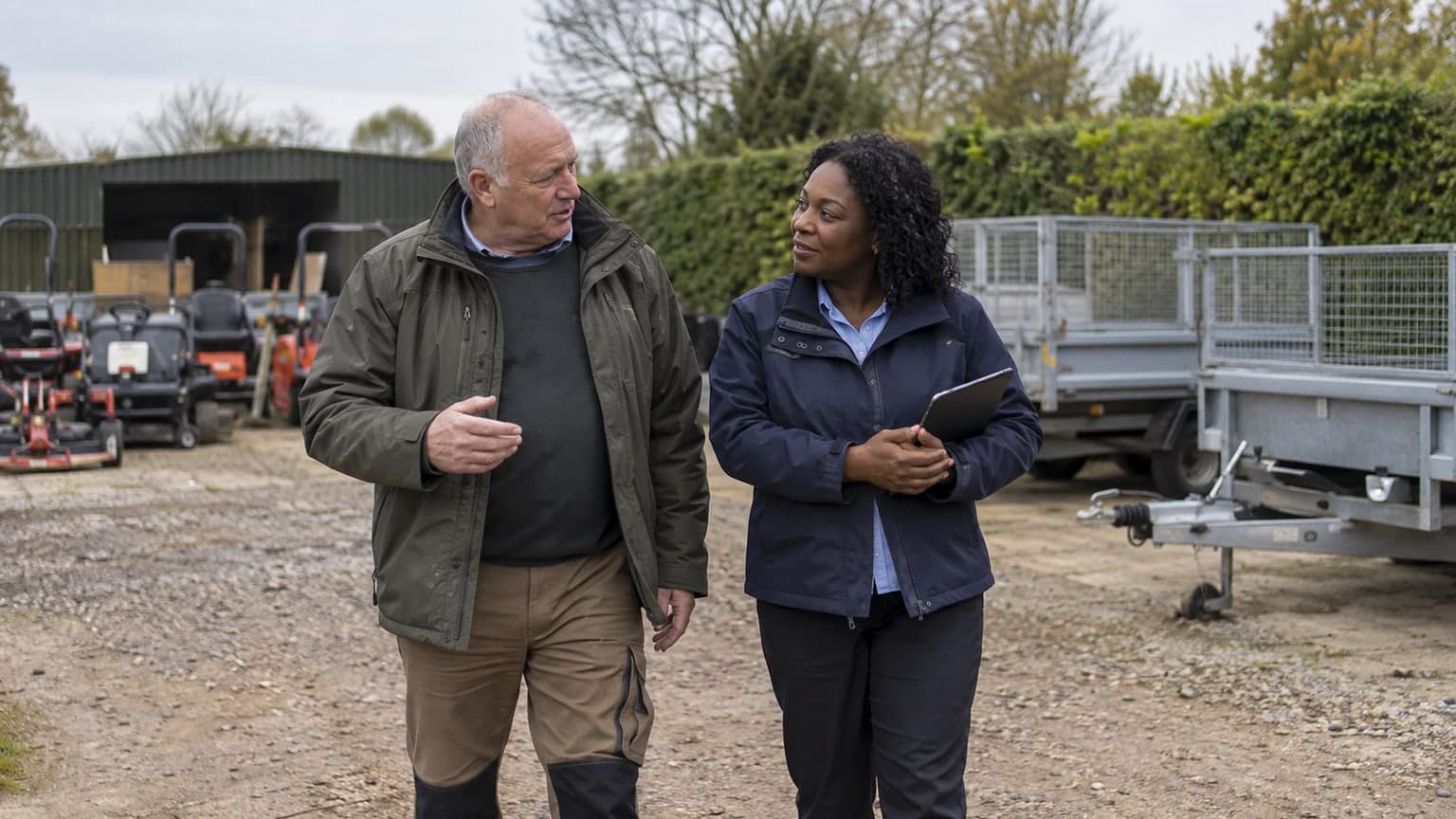
How to sell a landscaping business: the six-stage process, why timing inside the year matters here more than in any trade, and what decides your price.
Learning how to sell a landscaping business means working through the same six stages as any blue-collar sale - valuation, preparation, clean books, finding the right buyer, structuring the deal, and closing. What makes landscaping different from almost every other trade is timing inside the calendar year. Sell in November with next season's contracts unsigned and you're asking a buyer to pay for revenue that may or may not renew. Sell in late winter or early spring with the season's maintenance agreements already locked in, and you're selling a business with a proven, committed revenue base heading into its strongest months. According to the BizBuySell Insight Report, landscaping and yard service businesses sold on its marketplace closed at a median 2.63x Seller's Discretionary Earnings (SDE) over the four quarters ending Q1 2026, on median revenue of $612,000 and median cash flow of $137,500 - and where a specific business lands in that range depends heavily on whether the buyer is inheriting a signed season or a guess.
How to sell a landscaping business: the process in six stages
Every landscaping business sale that closes cleanly moves through the same six stages, in this order:
- Get a real valuation - know your SDE and where your business sits in the 2x to 3.5x range before you talk to anyone.
- Prepare the business - ideally 12-24 months before you list, with your contract renewal calendar as priority one.
- Clean up the books - three years of records that reconcile to the bank, broken out by residential versus commercial revenue.
- Find the right buyer - owner-operator, PE-backed consolidator, or local competitor, each wants something different.
- Structure the deal - price, terms, equipment and the contract book all get negotiated together.
- Survive due diligence and close - where renewal rates and crew retention either hold up or fall apart.
For the full mechanics of each stage across any trade, read the complete how to sell a blue collar business guide. What follows is what changes when the business is landscaping specifically - and it starts with when, not just how.
Why timing inside the year matters more in landscaping than any trade
Most trades sell whenever the owner is ready. Landscaping doesn't work that way, because the business itself has a season and buyers can tell the difference between a route that's about to renew and one that already has. Listing in late winter or early spring - once this season's residential maintenance agreements and commercial contracts are re-signed - lets a buyer walk in looking at a locked revenue base heading into the business's strongest months, rather than a spreadsheet of last year's numbers and a promise that customers will probably stick around.
Listing mid-season, by contrast, puts you in the worst possible spot twice over: you're too busy running peak-season operations to run a sale process properly, and a buyer evaluating the business can't tell whether this year's revenue is representative or a fluke. Listing right after the season ends, before the next year's contracts are signed, has the same problem in reverse - a buyer is being asked to underwrite renewal risk on every account in your book, and they will price that risk into the offer, not just note it as a concern.
The rule that actually moves your price: get your commercial contracts and residential maintenance agreements renewed for the coming season first, document the renewal rate, and only then go to market. A buyer who can see this year's book is signed is buying a business. A buyer looking at last year's book and this year's hope is buying a guess - and they'll offer accordingly.
What your landscaping business is worth before you list
Most main-street landscaping businesses sell for 2x to 3.5x SDE. The BizBuySell Insight Report puts the median closed-transaction multiple for landscaping and yard service businesses at 2.63x SDE over the four quarters ending Q1 2026, across 189 closed transactions, with an observed range of roughly 2.0x to 3.0x on trailing-twelve-month earnings and a median sale price of $325,000. Median owner earnings in the category surpassed $200,000 in 2025, according to BizBuySell, and margins have held steady even as revenue improved through the year. The single biggest driver of where your business lands in that range is the mix between commercial maintenance contracts and residential design-build work - a commercial route business with three-year property contracts and an 85% annual renewal rate is a fundamentally different asset to a buyer than a residential design-build operation of identical size, and the spread between the two can exceed $400,000 on businesses with the same top-line revenue.
Run your own numbers before you go further - net profit, plus your salary, plus the personal costs run through the business, equals SDE. For the full method with worked examples and where the commercial-versus-residential split moves your specific number, see how much a landscaping business is worth in 2026, or get an instant estimate from the free valuation tool.
Where landscaping business buyers come from - and what each one wants after closing
Landscaping attracts a broad buyer pool, and understanding what each type wants once the deal closes changes what you should ask for at the negotiating table.
- Individual owner-operators. The largest pool by number, usually financing with an SBA 7(a) loan, which typically requires about a 10% equity injection and a 1.25x debt service coverage ratio. That math caps what they can pay, which is why most owner-operator deals land in the 2x to 3x SDE range. This buyer wants you to stay involved through the transition, wants your foreman and crew to trust the new owner quickly, and often wants a seller note in the structure as a sign you believe in the business you're handing over.
- Private equity-backed consolidators. Commercial grounds maintenance is one of the more actively consolidated segments in home services right now, with platforms rolling up route-based businesses across multiple states to build density in a metro area. These buyers work off EBITDA rather than SDE, target businesses with a meaningful commercial contract base and $500,000 or more in adjusted earnings, and generally want the owner out of day-to-day scheduling fast - they're buying the contract book and the crew, not a relationship with you. Earnouts and rollover equity show up often in this buyer type; read the renewal-rate clauses closely before you sign.
- Local competitors. Often the fastest close and the highest confidentiality risk. A competitor may pay well for your route density and crew, but revealing who you are before they're qualified and under NDA can spook staff and customers before anything is signed - which is exactly why blind listings exist. Competitors typically want your commercial contracts transferred cleanly and your crew foreman retained through the first season, since a route is worth far less if the person who actually runs the daily schedule walks.
You don't need to pick one lane in advance. A well-run process exposes the business to all three pools at once and lets competition set the price and the terms, rather than negotiating in the dark against a single interested party.
The landscaping-specific deal points that decide your price
Two landscaping businesses with identical SDE can close $100,000 or more apart because of details that have nothing to do with revenue. These are the ones buyers press on hardest.
The commercial contract book and renewal rate
This is the single biggest lever you control, and it's the reason timing matters so much. A business holding 15 commercial property contracts at an average of $30,000 a year in committed annual revenue is a materially different asset from one that mows the same 15 properties on handshake terms that could evaporate the day a new owner takes over. Have your contract terms, renewal dates and historical renewal rate ready to show, and confirm the contracts are assignable to a new owner rather than triggering a re-bid the moment ownership changes. If most of your book is residential and handshake-based, converting even the top accounts to written seasonal agreements a year out from listing is the highest-return move available before a sale.
Commercial versus residential mix
Buyers pay up for the commercial share of your revenue because it renews on a predictable cycle and comes with less price shopping than residential mowing routes. A business that's 60% commercial maintenance and 40% residential design-build reads very differently to a buyer than one running the reverse mix at the same SDE, even though the P&L can look identical. Know your split cold before your first buyer conversation, because it's one of the first questions a serious buyer asks.
Equipment and fleet condition
Mowers, trucks, trailers and irrigation equipment are working capital a buyer prices line by line, not decoration they wave through. A fleet running past its useful life signals a capital expense the buyer absorbs in year one, and it invites a discount to cover the catch-up cost. Have maintenance and replacement records ready, be honest about equipment age and hours, and decide in advance whether the fleet is included in the asking price or valued and negotiated separately - both are normal, but ambiguity here slows every deal down.
Crew and foreman independence
A landscaping business that runs on daily routes is only as reliable as the person who builds and manages those routes. If your foreman or crew lead handles scheduling, quality control and customer escalations without you, say so explicitly and be ready to prove it - buyers who see the business run without the owner on-site price that reassurance directly into the offer. If your best crew members are a flight risk once word of a sale gets out, a retention bonus tied to closing and the first full season is worth negotiating before you list, not after a buyer's first spring on the job.
How long it takes to sell a landscaping business
Most main-street landscaping sales take six to twelve months from listing to close. BizBuySell's most recent data puts median days on market at around 155 days for service businesses generally, and the IBBA and M&A Source Market Pulse survey puts median time from accepted offer to close at roughly 170 days for small business transactions overall. Landscaping businesses that enter the market with the season's contracts freshly renewed, three clean years of books, and a documented commercial-versus-residential split consistently close on the faster end of that range. Deals that stall almost always trace back to something fixable before listing - a contract base nobody can produce renewal data for, an equipment list that raises more questions than it answers, or books that don't reconcile to the bank.
Preparing your landscaping business to sell
The work you do in the year or two before you list moves your price more than anything you negotiate at the closing table:
- Renew the season's contracts before you go to market. A signed book heading into spring is worth more to a buyer than a strong trailing year with nothing yet confirmed for the one ahead.
- Convert handshake accounts to written agreements. Even a year of tracked commercial contracts changes the recurring-revenue story you can tell a buyer.
- Get three years of clean books, split by revenue type. Every add-back needs to be documented and defensible, and commercial versus residential revenue should be visible at a glance. See getting your books sale-ready for the full checklist.
- Promote a foreman into a scheduling and QC role. Give them route authority, customer escalation responsibility and visibility into the numbers, then document that the business runs when you step back.
- Service the fleet before you list, not during diligence. A clean equipment maintenance file removes a negotiating point before a buyer ever raises it.
Common mistakes that sink a landscaping business sale
- Listing before the season's contracts are renewed. The single most avoidable landscaping-specific mistake, and the one that costs the most on the offer.
- Going to market mid-season. You're too stretched running peak operations to run a proper sale process, and a buyer can't evaluate the business cleanly while it's in the middle of its busiest months.
- No documented split between commercial and residential revenue. Buyers price the two very differently - if you can't show the split, they'll assume the worse mix.
- Anchoring on a single strong season. One unusually good year from storm cleanup or a one-off design-build project flatters your number, but buyers normalize for it - anchor your expectations on a trailing three-year average instead.
- No plan for foreman or crew retention. Losing the person who actually runs the routes in the first season after closing devalues the exact asset a buyer thought they were purchasing.
Selling a landscaping business well comes down to timing the market the way you'd time a planting - get the contracts renewed, get the books clean, and go out heading into the season rather than coming out of it. Get a real number first with the free valuation tool, then read the complete how to sell a blue collar business guide for the full process from valuation through closing. When you're ready, list free and see what buyers are actively looking for on live landscaping business listings.
Frequently asked questions
How do I sell my landscaping business?
Work through six stages in order: get a real SDE-based valuation, prepare the business for 12-24 months (renewing the season's contracts matters most), clean up three years of books split by revenue type, expose the business to all three buyer types at once, negotiate price and terms together, then survive due diligence and close. Businesses that list with the season's contracts freshly renewed consistently close faster and higher.
How much is a landscaping business worth?
Most main-street landscaping businesses sell for 2x to 3.5x Seller's Discretionary Earnings, with the BizBuySell Insight Report putting the median closed-transaction multiple at 2.63x SDE over the four quarters ending Q1 2026, on a median sale price of $325,000. Businesses with a strong commercial maintenance contract base and documented renewal rates command the higher end of that range. See the full worked breakdown in how much a landscaping business is worth in 2026.
When is the best time to sell a landscaping business?
Late winter or early spring, once the coming season's residential maintenance agreements and commercial contracts are re-signed. A buyer looking at a locked, renewed revenue base heading into the business's strongest months will pay more than one looking at last year's numbers and an unconfirmed guess about renewals. Avoid listing mid-season, when you're too stretched to run a proper sale process and a buyer can't cleanly evaluate the business.
Who buys landscaping businesses?
Three main buyer types: individual owner-operators financing with an SBA 7(a) loan who typically want the seller to stay on briefly for a transition; private equity-backed consolidators rolling up commercial grounds maintenance route businesses, who work off EBITDA and want the owner out of daily scheduling fast; and local competitors who pay well for route density and crew but need strict confidentiality until they're qualified and under NDA.
How long does it take to sell a landscaping business?
Most main-street landscaping sales take six to twelve months from listing to close. BizBuySell puts median days on market at around 155 days for service businesses, and the IBBA and M&A Source Market Pulse survey puts median time from accepted offer to close at roughly 170 days for small business transactions overall. Businesses with a documented, freshly renewed contract base and clean books tend to close on the faster end of that range.
Do commercial contracts increase what my landscaping business sells for?
Yes, significantly. A commercial route business with multi-year property contracts and a documented 85% or higher annual renewal rate is a fundamentally different asset to a buyer than a residential design-build operation of the same size, and the spread between the two can exceed $400,000 on businesses with identical revenue. Converting handshake residential accounts to written seasonal agreements before listing is one of the highest-return moves available to a seller.
Thinking about your own exit?
Get a free, instant ballpark valuation - no sign-up to see your estimate - then we connect you with a vetted broker and lawyer to handle the sale.