Buying
Recurring Revenue: Why Maintenance Contracts Change the Multiple
ContractorExit Editorial Team
In-house editorial · 9 Nov 2026 · 9 min read
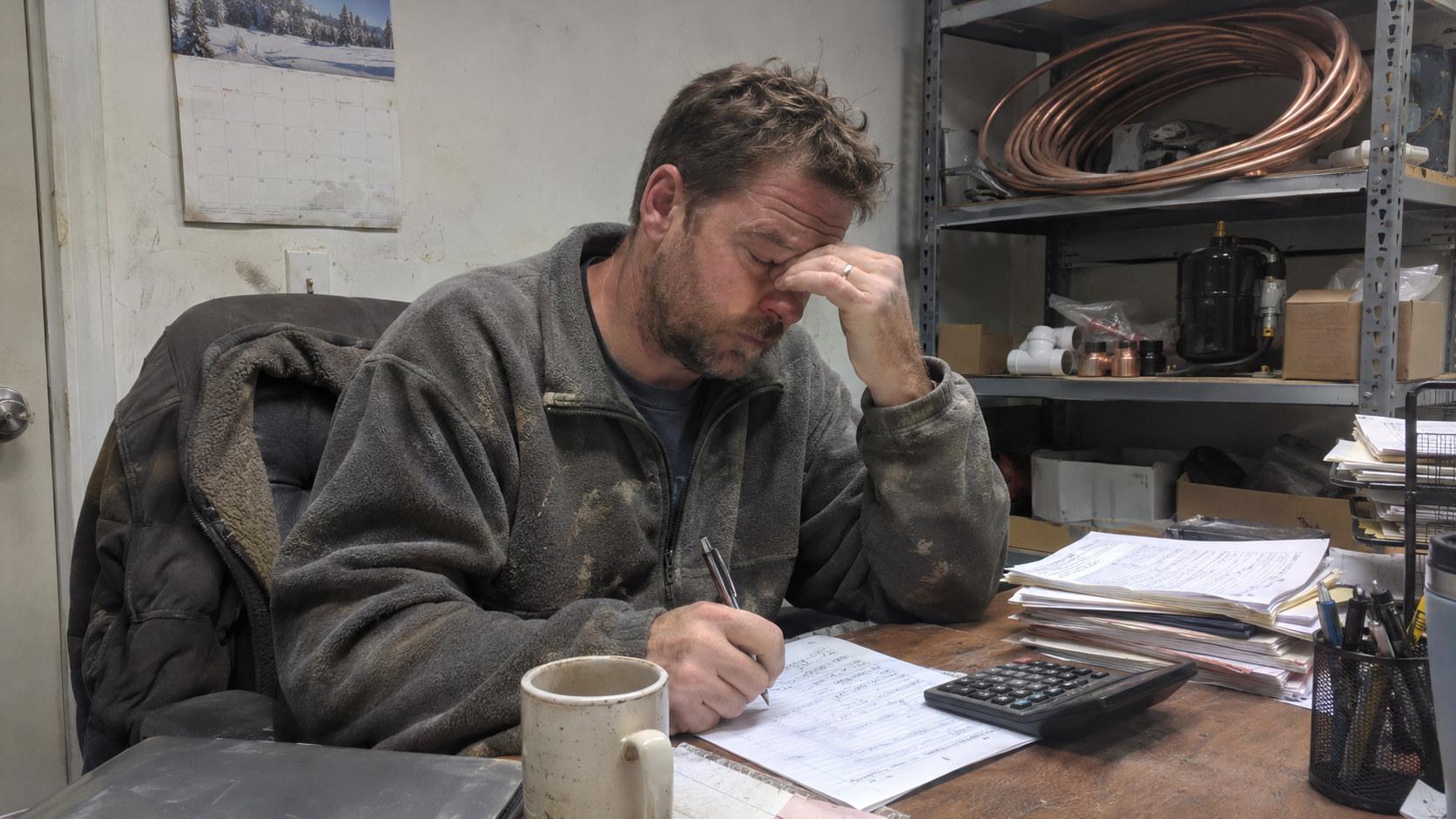
Recurring revenue drives small business value. Two firms with identical SDE can sell $200,000-$400,000 apart because one has signed maintenance contracts.
Recurring revenue is the single biggest lever on small business value that has nothing to do with how much money the business made last year. Two trade businesses can show the exact same $200,000 in seller's discretionary earnings and sell $200,000 to $400,000 apart, because one has 40% of that revenue locked into signed service contracts and the other has none. Same P&L. Different business, in a buyer's eyes.
Why recurring revenue moves the number, not just the story
A buyer isn't pricing what the business made. They're pricing what the business is going to make next year, without you in it. BizBuySell's own guidance to buyers makes the logic plain: recurring revenue is easier to forecast, and easier to forecast means easier to underwrite, and easier to underwrite means a buyer and their lender will pay more for it. According to the IBBA's Market Pulse survey for Q4 2024, businesses with subscription-based or contractual client revenue command measurably higher multiples than comparable businesses without it, because that revenue carries less risk for the person writing the check.
That's the whole trick. Not more revenue. Not even more profit. The same profit, with a signature on it instead of a hope.
What actually counts as recurring revenue
People mix this up constantly, and it costs them real money at the negotiating table. Three different things get called "recurring," and only one of them is worth a premium:
- A signed contract with a term and a renewal. A quarterly pest control route, a three-year commercial cleaning facility agreement, an HVAC maintenance plan with an auto-renew clause. This is paper. It survives a change of ownership whether the customer likes the new owner or not, within the notice period.
- A repeat customer with no agreement. The homeowner who calls you every spring for the same service. That's a habit, not an asset. Habits are loyal to you, the person, not to the business. A buyer can't underwrite a habit.
- A backlog of signed project work. A roofing company with six months of jobs booked is sitting on good news, but it's a one-time cushion, not recurring revenue. It runs out and doesn't renew itself.
Only the first one changes the multiple. The other two are worth mentioning in a conversation with a buyer. They are not worth a line item on a valuation.
The side-by-side: 40% under contract vs. 0%
Take two trade businesses, each generating exactly $200,000 in SDE. Business A does good work, has loyal customers, and books jobs call by call with nothing in writing. Business B does the same quality of work, but 40% or more of its revenue comes from signed, renewing service agreements.
- Business A sells at the low end of its trade's range. Call it 2.0x-2.3x SDE for a main-street service business with no contracted revenue, which puts the sale price around $400,000-$460,000.
- Business B sells meaningfully higher on identical earnings. Our own data on cleaning business valuation shows commercial operations with multi-year facility agreements regularly pushing 4x SDE and above, against a 2x-3.5x main-street range for businesses without them. On pest control business valuation, the gap is even starker: BizBuySell Insight Report data puts the average SDE multiple at roughly 2.45x, but a route business with 70% or more of revenue on active quarterly agreements and retention above 85% consistently reaches 3x-5x SDE.
Run the math on the high end of that pest control range and Business B sells for $600,000-$1,000,000 on the exact same $200,000 of earnings Business A is selling for $400,000-$460,000. That's not a rounding difference. That's one business funding a comfortable retirement and the other barely covering the loan payoff.
A repeat customer is a habit. A signed contract is an asset. Buyers pay for the second one and politely ignore the first.
Why buyers and lenders pay for the paper, not the promise
Three reasons this holds up every time, not just in theory:
- It's forecastable before a single job is dispatched. A contract tells a buyer what next year's revenue line looks like on day one of ownership, before they've met a single customer.
- It's easier to finance. SBA 7(a) lending is underwritten against the business's cash flow, not the seller's word for it. A lender writing a loan against revenue backed by signed agreements has an easier file to approve than one backed by "customers tend to come back."
- It survives you leaving, which is the whole point of selling. A contract renews because of a signature and a notice clause, not because the customer likes calling your cell phone. That's exactly the kind of owner dependence a buyer is trying to price out of the deal, and a real contract does that work for you.
One caution worth saying plainly: recurring is not automatically good. If 40% of your revenue is "recurring" because it all sits in one contract with one customer, you haven't built recurring revenue. You've built customer concentration risk wearing a nicer name. The premium is for recurring revenue spread across many accounts, not parked in one.
Where contracted revenue is easiest to build, trade by trade
Not every trade gets the same shot at this. Some businesses can wrap a third of their revenue in paper within a year. Others are structurally stuck selling one job at a time, no matter how good the work is.
- HVAC has the clearest path of any trade. A maintenance agreement is a standard product here, not a novelty, and our guide to HVAC business valuation shows the gap it opens: an HVAC company doing $1.5M in revenue with no service agreements sells for a fraction of one doing identical revenue with 40% under contract, even with the same books otherwise.
- Plumbing is sitting on the same opportunity and mostly ignoring it. Service plumbing businesses that build out real maintenance relationships push toward 4x SDE against a 2x-3.5x range for the trade generally, per our plumbing business valuation data. Most plumbing owners never build the agreement in the first place, because nobody asks them to.
- Landscaping splits cleanly into two businesses wearing one name. A commercial grounds maintenance operation holding three-year property contracts is a different asset than a residential design-build crew, and the spread between them can exceed $400,000 on identical revenue - see our landscaping business valuation guide.
- Roofing is the hardest trade to fix this in. Storm-restoration work is inherently one-off by nature, and a roofing company built on it trades at a structural discount to HVAC and plumbing even at identical earnings. Per our roofing company valuation guide, the fix is building out a service and repair revenue base - the closest thing roofing has to a maintenance contract.
The pattern holds across every trade we track: the business that can point to a signed agreement beats the business that can only point to a good reputation, every time a buyer is actually writing a check.
If you're selling: turn habits into paper
This is slower than any other move on your pre-sale checklist, which is exactly why it belongs on the same 12-24 month runway as the rest of your prep. See our full guide to preparing a business for sale. The specific moves:
- Put your best repeat customers onto a real agreement. Even a simple one-year contract with a 30- or 60-day notice period converts a habit into an asset a buyer can underwrite.
- Track your actual renewal rate and write it down. A buyer wants a number - "92% of contracted accounts renewed last year" - not a feeling. Pull the data before you list, not when a buyer asks for it in diligence.
- Keep the pricing on contracted accounts honest. A contract billed below market rate to keep a customer happy is worth less than the same contract at full rate. Fix it before a buyer finds it.
- Spread it across accounts, not one. Forty percent recurring from twenty customers prices very differently than forty percent recurring from one.
Rule I live by from running a maintenance company that worked housing associations and letting agents in London: the signed framework agreements were worth more to a buyer than ten good months of one-off repair jobs, because the paper said the work kept coming whether or not I personally answered the phone. One-off jobs are proof you can work. A contract is proof the business doesn't need you to.
If you're buying: verify the contract is real, not just the percentage
A seller telling you "40% of revenue is recurring" is a claim, not a fact. This is one specific item on our due diligence checklist for buying a business, and it deserves more than a glance at the headline number:
- Check the term and the transferability. Does the agreement survive a change of ownership automatically, or does the customer have to consent to a new signatory? A contract that needs re-signing after close is a contract you don't actually own yet.
- Ask for the renewal history, not the stated percentage. Two or three years of actual retention data tells you more than a seller's estimate of how "sticky" the accounts are.
- Check how it's spread. Forty percent recurring across 150 small accounts is a different business than forty percent recurring from one large one. If it's concentrated, read our guide to pricing customer concentration risk before you finalize an offer.
- Price what you can prove, not what you're told. If the seller won't produce the signed agreements or the renewal data, underwrite the business as if that revenue isn't recurring at all. Let them prove you wrong, not the other way around.
Get this right and you're not just buying a trades business. You're buying the part of it that doesn't disappear the day the old owner stops showing up.
Whether you're pricing recurring revenue into an offer or building it before you sell, start with a real number. Get a free valuation to see where your contracted revenue actually puts you, or browse trades businesses for sale if you're underwriting your next deal. For the full picture on how trades businesses get priced, read our guide to blue collar business valuation.
Frequently asked questions
What is recurring revenue in a small business?
Revenue from a signed agreement with a term and a renewal or notice clause, like a maintenance contract or a service plan, not just a customer who happens to come back. The agreement is what makes it recurring, not the customer's habit.
How much more is a business with recurring revenue worth?
It depends on the trade and how much of revenue is contracted, but the gap is real money. Our data on pest control businesses shows a jump from roughly 2.45x average SDE to 3x-5x once 70% or more of revenue sits in renewing quarterly agreements. On an identical $200,000 SDE business, that's a $400,000-plus difference in sale price.
Does a repeat customer count as recurring revenue?
Not to a buyer. A repeat customer with no written agreement is loyal to you personally, not to the business, and that loyalty often doesn't survive a change of ownership. Buyers and lenders price what's on paper, not what's in your head about who tends to call back.
What percentage of recurring revenue do buyers look for?
There's no official cutoff, but the pattern is consistent: above roughly 40% of revenue under contract starts to meaningfully move the multiple, and businesses at 70% or more in contract-heavy trades like pest control or commercial cleaning can reach the top of their valuation range.
How do you prove recurring revenue is real during due diligence?
Ask for the signed agreements themselves, not a summary, plus two to three years of actual renewal data. Check whether each contract survives a change of ownership automatically or needs the customer to re-sign, and check whether the recurring revenue is spread across many accounts or concentrated in one.
Does recurring revenue help with SBA financing?
Indirectly, yes. SBA 7(a) loans are underwritten against the business's cash flow, and cash flow backed by signed contracts is an easier file for a lender to approve than cash flow backed only on the seller's word that customers come back.
Thinking about your own exit?
Get a free, instant ballpark valuation - no sign-up to see your estimate - then we connect you with a vetted broker and lawyer to handle the sale.