Selling
How to Sell an HVAC Business: Process, Buyers and Price
ContractorExit Editorial Team
In-house editorial · 26 Aug 2026 · 9 min read
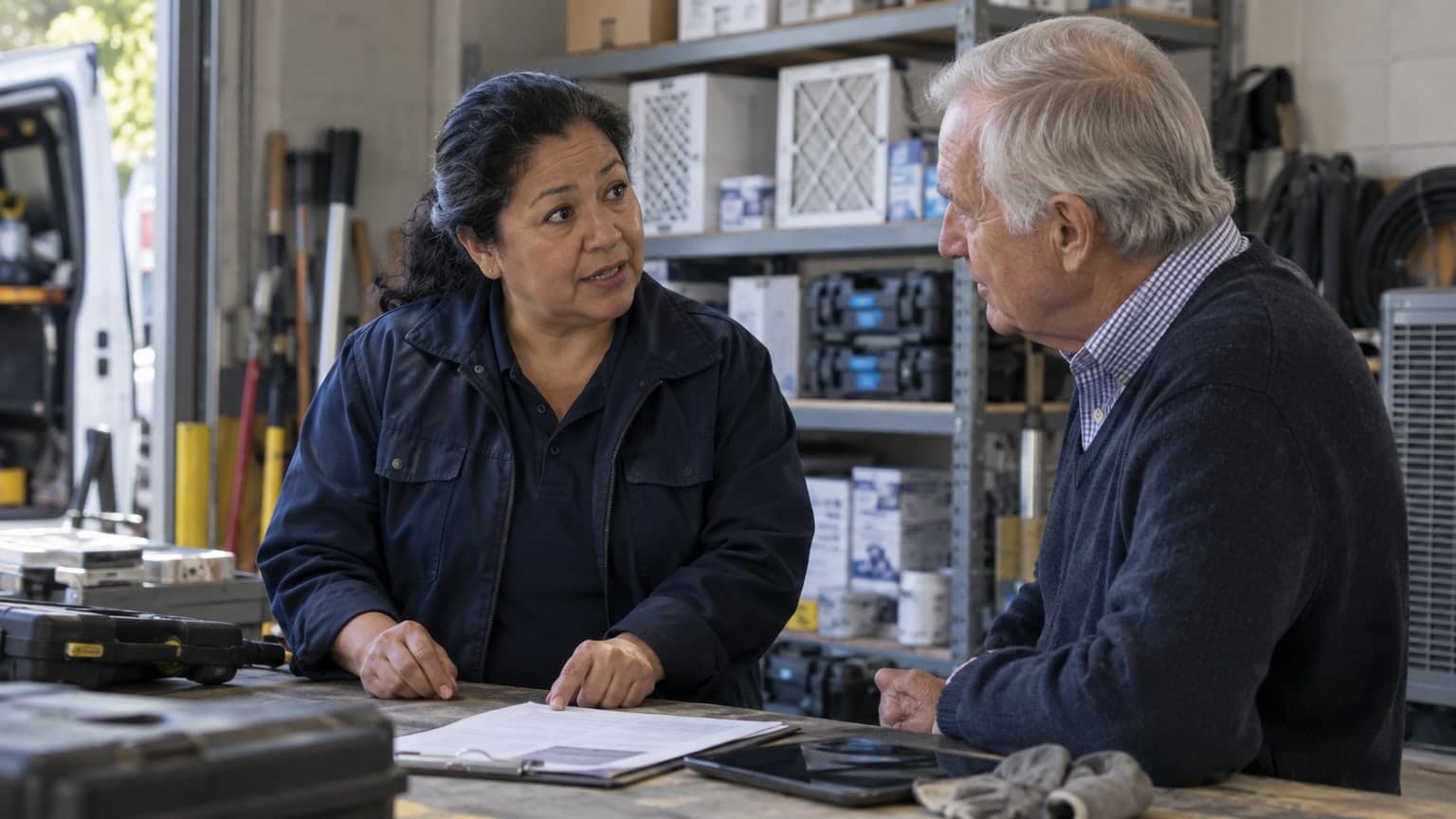
How to sell an HVAC business: the six-stage process, the three buyer types shopping right now, and the maintenance base and licensing that set the price.
Learning how to sell an HVAC business - or figuring out where to start if you're thinking "I need to sell my HVAC business" this year - means working through the same six stages as any blue-collar sale: valuation, preparation, clean books, finding the right buyer, structuring the deal, and closing. What makes HVAC its own playbook is the buyer pool. Individual owner-operators, private equity add-on platforms and local competitors are all actively shopping for HVAC businesses right now, and each one pays differently, moves at a different speed, and wants something different from you after closing. According to BizBuySell, the average cash flow multiple for HVAC businesses sold on its marketplace runs at approximately 2.79x Seller's Discretionary Earnings (SDE), and most main-street sales close in six to twelve months. Which buyer you end up with - not just what multiple you land - determines almost everything about how the next year of your life looks.
How to sell an HVAC business: the process in six stages
Every HVAC business sale that closes cleanly moves through the same six stages, in this order:
- Get a real valuation - know your SDE and where your business sits in the range before you talk to anyone.
- Prepare the business - ideally 12-24 months before you list, with the maintenance agreement base as priority one.
- Clean up the books - three years of records that reconcile to the bank.
- Find the right buyer - owner-operator, PE-backed platform, or local competitor, each wants something different.
- Structure the deal - price, terms, licensing and fleet all get negotiated together.
- Survive due diligence and close - where the maintenance base and technician retention either hold up or fall apart.
For the full mechanics of each stage across any trade, read the complete how to sell a blue collar business guide. What follows is what changes when the business is HVAC specifically.
What your HVAC business is worth before you list
Small owner-operated HVAC shops typically sell for 2x to 3.5x SDE, established residential service businesses with $500,000 to $1M in EBITDA attract 5x to 7x EBITDA from financial buyers, and larger platform-scale deals push well past 10x EBITDA. BizBuySell puts the average cash flow multiple across HVAC transactions on its marketplace at roughly 2.79x SDE, and the single biggest driver of where you land in that range is the size of your maintenance agreement base - HVAC companies with 40% or more of revenue under service agreements command a 0.5x to 1.0x higher multiple than installation-dependent businesses of the same size, according to BizBuySell deal data.
Run your own numbers before you go further - net profit, plus your salary, plus the personal costs run through the business, equals SDE. For the full method with worked examples and the five factors that move your multiple, see how much an HVAC business is worth in 2026, or get an instant estimate from the free valuation tool.
Where HVAC business buyers come from - and what each one wants after closing
HVAC sits at the center of the current wave of trades M&A, which means you have more buyer options than almost any other trade - but it also means you need to know what each buyer type actually wants once the ink is dry, because it changes what you should ask for at the negotiating table.
- Individual owner-operators. The largest pool by number, usually financing the purchase with an SBA 7(a) loan, which generally requires about a 10% equity injection and a debt service coverage ratio of 1.25x. That arithmetic caps what they can pay regardless of enthusiasm, which is why most owner-operator deals land in the 2x to 3.5x SDE range. This buyer wants you to stay involved for a transition period, wants your technicians to trust the new owner quickly, and often wants the deal structured with a seller note that signals you believe in the business you're leaving behind.
- Private equity add-on platforms. HVAC is one of the most actively consolidated trades in home services. According to S&P Global Market Intelligence, PE-backed platforms have kept up an aggressive pace of add-on acquisitions through 2025 and into 2026, with one major platform, Apex Service Partners, completing roughly 60 HVAC acquisitions in 2025 alone. These buyers work off EBITDA rather than SDE, target businesses with $500,000 or more in adjusted earnings, and generally want you gone from day-to-day operations fast - they're buying a management team and a service agreement base, not a relationship with you personally. Earnouts and rollover equity are common in this buyer type; read them carefully before you sign.
- Local competitors. Often the fastest close, and the highest confidentiality risk. A competitor may pay well for your technician bench, service territory and maintenance contract list, but revealing who you are before they're qualified and under NDA can spook staff and customers before a deal even gets signed. This is exactly why blind listings exist - your numbers are visible, your name is not, until a buyer proves they're serious. Competitors typically want your customer list transferred cleanly and your technicians retained through a transition bonus, since the acquired book is worth far less if half the crew walks in the first month.
You don't need to pick one lane in advance. A well-run process exposes your business to all three pools at once and lets competition set both the price and the terms, rather than negotiating in the dark against a single interested party.
The HVAC-specific deal points that decide your price
Two HVAC businesses with identical SDE can close $100,000 or more apart because of details that have nothing to do with revenue. These are the ones buyers press on hardest.
The maintenance agreement base
This is the single biggest lever you control. A business with 800 active service agreements at $300 a year carries $240,000 in committed annual revenue before a single install job is booked - and that predictability is exactly what buyers pay a premium multiple for. Have your enrollment numbers, plan terms and renewal rates ready to show, and confirm the agreements are assignable to a new owner without requiring every customer to re-sign. If your program is thin, building it even 12 months out from listing is the highest-return move available to you before a sale.
EPA certification and contractor licensing
Every technician who handles refrigerant needs an EPA Section 608 certification, and most states layer a separate HVAC contractor license on top - one that is often held personally by you rather than the business entity. If you plan to leave day one and the license doesn't transfer automatically, the buyer inherits a business that legally can't perform the work it was bought to do. Resolve the licensing structure before you go to market, through entity-level licensing where your state allows it, a qualifying-party arrangement, or you staying on as the licensed qualifier through a defined transition period.
Fleet and equipment condition
Your service vans, diagnostic tools and shop equipment are working capital a buyer prices line by line, not decoration they wave through. A fleet with deferred maintenance signals a capital expense the buyer will absorb in year one, and it invites a discount on the offer to cover the catch-up cost. Have maintenance records ready, be honest about vehicle age and mileage, and decide in advance whether the vans are included in the asking price or valued and negotiated separately - both are normal, but ambiguity here slows every deal down.
Technician retention
EPA-certified, experienced HVAC technicians are hard to hire and slow to train, which makes your crew part of what a buyer is actually purchasing. If your lead technician or service manager runs scheduling and escalations independently of you, say so explicitly and be ready to prove it - buyers who see the business survive without the owner on-site price that reassurance directly into the offer. If a key tech is a flight risk once they hear about a sale, a retention bonus tied to closing is worth negotiating before you list, not after a buyer's first day on the job when it's too late to matter.
How long it takes to sell an HVAC business
Most main-street HVAC business sales take six to twelve months from listing to close. The IBBA and M&A Source Market Pulse survey puts the median time from accepted offer to close at around 170 days for small business transactions generally, and businesses that enter the market with the licensing question resolved, three clean years of books and a documented maintenance base consistently close on the faster end of that range. Deals that stall almost always trace back to something that could have been fixed before listing - an unresolved license, a service agreement base nobody can produce renewal data for, or books that don't reconcile to the bank.
Preparing your HVAC business to sell
The work you do in the year or two before you list moves your price more than anything you negotiate at the closing table:
- Grow and document the maintenance agreement base. Even a year of tracked enrollments and renewal rates changes the recurring-revenue story you can tell a buyer.
- Resolve the licensing structure now. Talk to a business attorney in your state about entity-level licensing or a qualifying-party arrangement well before an offer arrives.
- Get three years of clean books. Every add-back needs to be documented and defensible, not just claimed. See getting your books sale-ready for the full checklist.
- Promote a lead technician into an operations role. Give them scheduling authority, customer escalation responsibility and P&L visibility, then document that the business runs when you step back.
- Service the fleet before you list, not during diligence. A clean vehicle maintenance file removes a negotiating point before a buyer ever raises it.
Common mistakes that sink an HVAC business sale
- Going to market with no maintenance agreement data. Buyers can't pay for recurring revenue they can't verify - if you have a service base, prove it with numbers, not a claim.
- Listing before the license question is resolved. One of the most common HVAC-specific deal killers, and one of the easiest to fix early and the hardest to fix late.
- Talking to a competitor without an NDA in place. Even a casual conversation can leak to staff or customers before you're ready.
- Anchoring on a peak storm-season year. A single unusually strong year from replacement demand flatters your number, but buyers normalize for it - anchor your expectations on a trailing three-year average instead.
- No plan for key technician retention. Losing your best techs in the first month after closing devalues the exact asset a buyer thought they were purchasing, and it's the fastest way to end up in an earnout dispute.
Selling an HVAC business well comes down to removing the surprises before a buyer finds them - the licensing, the fleet, the crew and the maintenance base all need to hold up under diligence, not just look good on a listing summary. Get a real number first with the free valuation tool, then read the complete how to sell a blue collar business guide for the full process from valuation through closing. When you're ready, list free and see what buyers are actively looking for on live HVAC business listings.
Frequently asked questions
How do I sell my HVAC business?
Work through six stages in order: get a real SDE-based valuation, prepare the business for 12-24 months (the maintenance agreement base matters most), clean up three years of books, expose the business to all three buyer types at once, negotiate price and terms together, then survive due diligence and close. Businesses that resolve licensing and document their service contracts before listing consistently close faster and higher.
How much is my HVAC business worth?
Small owner-operated HVAC shops typically sell for 2x to 3.5x Seller's Discretionary Earnings, with BizBuySell putting the average cash flow multiple at approximately 2.79x SDE. Businesses with $500,000 or more in EBITDA and a strong maintenance agreement base attract 5x to 7x EBITDA from financial buyers and PE-backed platforms. See the full worked breakdown in how much an HVAC business is worth in 2026.
Who buys HVAC businesses?
Three main buyer types, each wanting something different after closing: individual owner-operators financing with an SBA 7(a) loan who typically want you to stay on briefly for a transition; private equity add-on platforms - one major platform, Apex Service Partners, completed roughly 60 HVAC acquisitions in 2025 alone according to S&P Global Market Intelligence - who work off EBITDA and want you out of day-to-day operations fast; and local competitors who pay well for your customer base but need strict confidentiality until they're qualified and under NDA.
Does my HVAC contractor license transfer when I sell?
Not automatically in most states. The HVAC contractor license and each technician's EPA Section 608 refrigerant certification are usually held personally, not by the business entity. Buyers and sellers typically resolve this through entity-level licensing where the state allows it, a qualifying-party arrangement, or the seller staying on as the licensed qualifier for a defined transition period. Resolve this before listing - it is one of the most common HVAC-specific deal killers.
How long does it take to sell an HVAC business?
Most main-street HVAC sales take six to twelve months from listing to close. The IBBA and M&A Source Market Pulse survey puts the median time from accepted offer to close at around 170 days for small business transactions generally. Businesses with a documented maintenance base, resolved licensing and clean books tend to close on the faster end of that range.
Do maintenance agreements increase what my HVAC business sells for?
Yes, significantly. HVAC companies with 40% or more of revenue under service agreements command a 0.5x to 1.0x higher earnings multiple than installation-dependent businesses of the same size, according to BizBuySell deal data. A documented, actively renewing agreement base is the single biggest lever you control before a sale.
Thinking about your own exit?
Get a free, instant ballpark valuation - no sign-up to see your estimate - then we connect you with a vetted broker and lawyer to handle the sale.